
Air Compressor Systems for Industrial Applications
Energy-efficient compressed air solutions for laser cutting, oil-free production, general manufacturing and low-pressure, high-volume applications—supported by practical system selection and engineering expertise from CAMDA Engineering.
Intelligent Compressor Station and Energy Management
Watch an overview of an intelligent compressor station designed to combine compressed air generation, treatment and connected energy management in a coordinated system.
Reliable Air Power Without Unnecessary Energy Waste
Compressed air is one of the most useful utilities in an industrial plant, but it can also become one of the most expensive when the compressor is incorrectly sized, operated at excessive pressure or poorly matched to changing demand. CAMDA Engineering helps manufacturers select an air compressor system around the actual process—not simply around a catalogue motor rating.
Our range includes high-pressure integrated systems for fibre laser cutting, oil-free technologies for sensitive production, permanent-magnet variable-speed compressors for everyday factory air, and low-pressure screw compressors or blowers for applications that need large airflow rather than high pressure.
- Application-based pressure, flow and air-quality selection
- Integrated compressor packages for simpler installation
- Variable-speed options that respond to changing air demand
- Oil-free solutions for critical products and processes

A Better Way to Specify an Air Compressor
A dependable compressed air system begins with the process requirements and operating pattern. These two steps help prevent oversizing, unstable pressure and avoidable electricity consumption.
Define the Air Requirement
Establish required pressure, normal and peak flow, duty cycle, acceptable dew point, air-purity level and expected future expansion. A laser cutter, medical process and wastewater aeration basin require very different compressor technologies even when their motor ratings appear similar.
Match the Right Technology
Select fixed speed, variable speed, scroll, dry screw, water-lubricated screw, centrifugal, low-pressure screw or screw blower technology according to the demand profile. The correct treatment equipment, receiver and controls can then be integrated around that compressor.
Designed Around Efficiency, Air Quality and Uptime
The best compressor is not automatically the largest machine. It is the system that supplies the required air quality and pressure reliably while keeping lifecycle cost under control.
Lower Energy Demand
Permanent-magnet motors and variable-speed drives can reduce unloaded running and match output to fluctuating production demand. Low-pressure models also avoid paying to compress air beyond the pressure the process actually needs.
Stable Process Pressure
Responsive controls and correctly sized storage help maintain a controlled pressure band. Stable air improves repeatability for laser cutting, pneumatic tools, conveying, spinning and automated production equipment.
Application-Specific Purity
Class 0 oil-free compressor options minimise contamination risk where compressed air can contact sensitive components, medicines, food, medical devices or high-value electronics.
Simplified Ownership
Integrated packages can combine the compressor, receiver, dryer and filters on one platform. This reduces site coordination, shortens installation time and provides clearer responsibility for the complete air supply.
Choose an Air Compressor by Application
Different processes require different pressure, airflow and air-purity levels. Start with the application that most closely matches your operating requirement.
Fibre Laser Cutting
Stable high-pressure air can support clean, repeatable cutting while reducing dependence on bottled nitrogen for suitable materials and thicknesses. Integrated 16-bar packages simplify moisture and particle control.
Clean and Critical Production
Pharmaceutical, medical, electronics, laboratory and food-related operations may require oil-free compression to protect product quality, downstream equipment and validation requirements.
Low-Pressure High-Flow Processes
Textile production, glass manufacturing, wastewater aeration and pneumatic conveying often benefit from dedicated low-pressure compressors or screw blowers rather than throttled high-pressure plant air.
Explore Industrial Air Compressor Models
The range is organised by application so engineering teams can shortlist suitable technologies quickly. Final capacity and configuration should be confirmed from measured or calculated site demand.
Stable 16-Bar Air for Fibre Laser Cutting
Laser cutting needs more than high pressure. The air supply must be dry, clean and stable to protect optics, avoid inconsistent cuts and help produce smoother edges. Integrated compressor packages combine the equipment needed to generate and condition air for suitable laser cutting duties.
LZ22TK “Armor” Series
The LZ22TK Armor is a heavy-duty, skid-mounted compressed air station developed for laser cutting environments. Its protective frame and integrated configuration support faster installation while reducing the number of separate items that must be coordinated on site.
- Compressor, treatment and storage in one package
- Designed for stable high-pressure laser air
- Protective structure for industrial environments
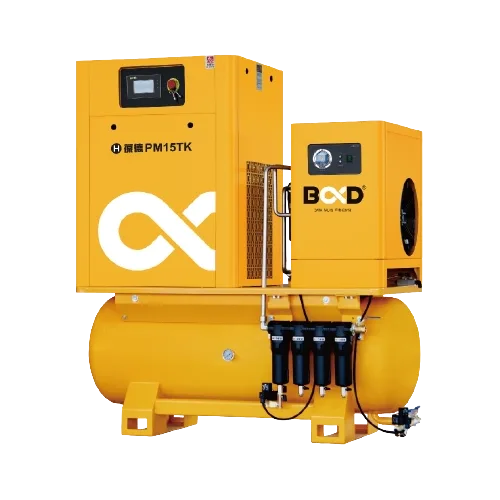
PM-TK Series
The PM-TK Series places the compressor and key air-system components into a compact tank-mounted arrangement. It is a practical choice where floor space is limited and the user wants a tidy, serviceable package for a laser cutting machine.
- Compact footprint for constrained production areas
- Integrated receiver arrangement
- Suitable for dedicated laser air supply
Protect Sensitive Products with Oil-Free Compression
Where contamination can affect product safety, surface quality, measurement accuracy or regulatory compliance, removing oil from the compression chamber is an important risk-control decision. The CAMDA range provides several oil-free technologies so the compressor principle can be matched to capacity, noise, maintenance and installation requirements.
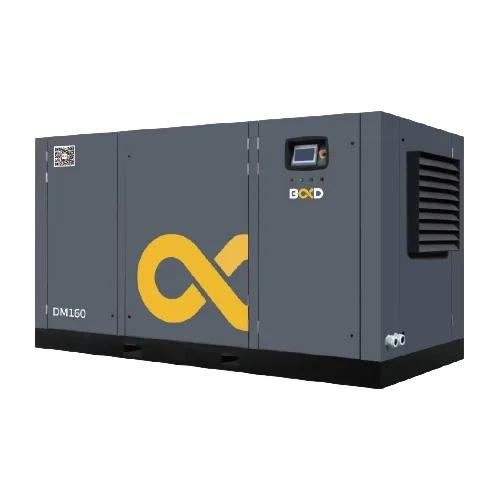
BD-DM Series
BD-DM dry-screw compressors provide factory-scale oil-free air without introducing lubricant into the compression chamber. They are suited to continuous clean-air duties in pharmaceutical, electronics, chemical and precision manufacturing facilities.
- Oil-free compression chamber
- Suitable for demanding continuous operation
- Factory-wide clean compressed air supply
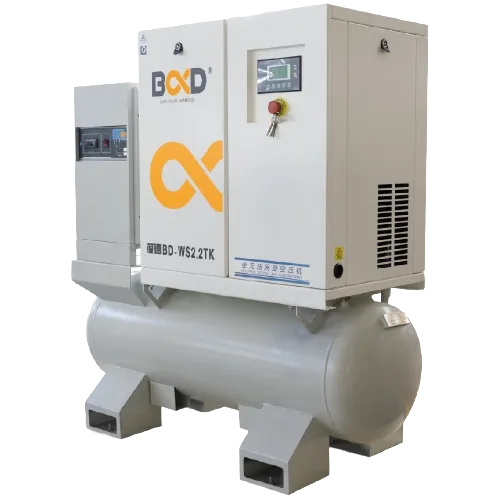
WS-TK Series
Oil-free scroll compression offers low vibration and reduced operating noise for laboratories, medical environments, research facilities and smaller clean-air applications. The tank-mounted format creates a compact and accessible air supply.
- Low-noise, low-vibration operation
- Clean air for laboratories and healthcare
- Compact modular arrangement
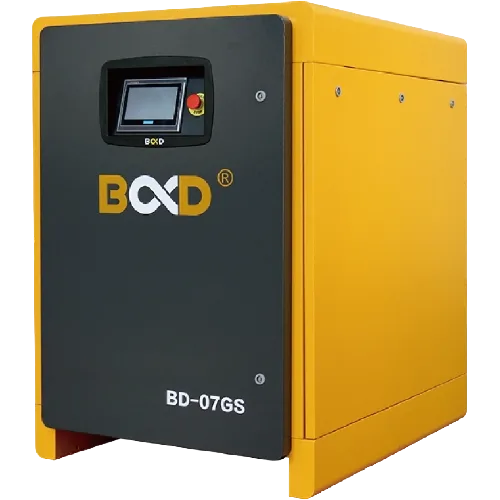
GS Series
The GS Series uses purified water for sealing and cooling within the compression process. It combines oil-free output with screw-compressor delivery characteristics and is relevant to food, medical, pharmaceutical and other cleanliness-focused operations.
- Purified water used for sealing and cooling
- Oil-free compressed air output
- Suitable for clean continuous-duty applications
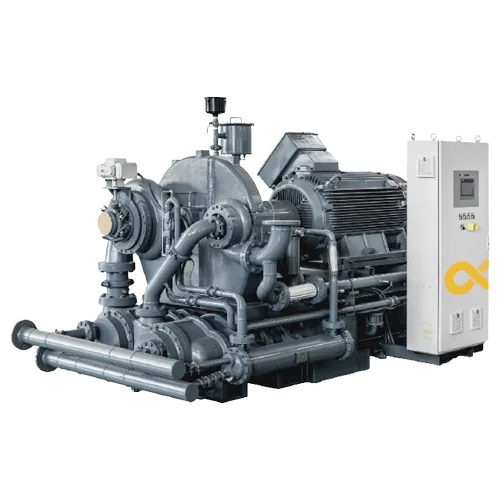
BC Series
BC centrifugal compressors are intended for large, steady plant-air demand. Available capacities can support approximately 45 to more than 300 cubic metres per minute, making the technology suitable where one central machine may replace several smaller compressors.
- High-volume continuous air delivery
- Oil-free centrifugal compression
- Central utility option for large facilities
Efficient Plant Air for Variable and Continuous Demand
Most factories experience a changing demand profile as production lines start, stop or change shifts. Permanent-magnet variable-speed compressors can follow this demand more closely, while fixed-speed machines remain appropriate for stable base loads. A coordinated multi-compressor system may use both approaches.
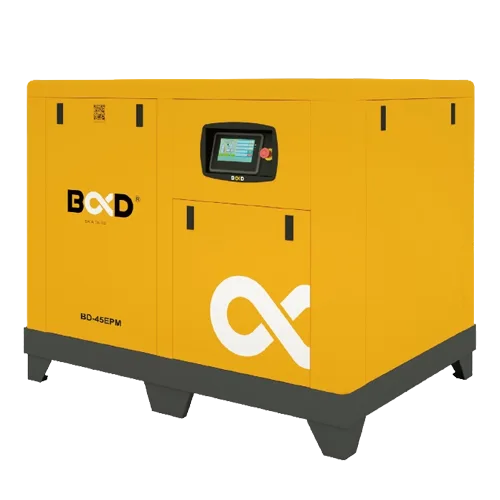
BD-EPM Series
A versatile permanent-magnet variable-speed screw compressor for common 7–10 bar factory applications. Output can adjust to demand, helping reduce unload losses and pressure fluctuations in plants with a variable operating pattern.
- Permanent-magnet motor
- Variable-speed air delivery
- General manufacturing and assembly use
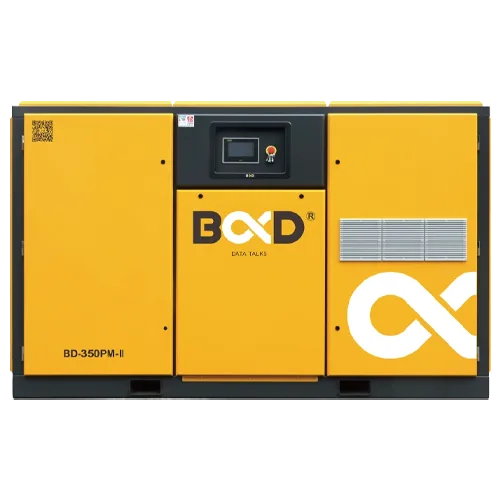
BD-PM-II Series
Two-stage compression divides the pressure ratio across two air ends, improving thermal performance for heavy, continuous-duty production. It is a strong option for plants where the compressor operates for long hours and small efficiency gains create meaningful savings.
- Designed for demanding 24/7 service
- Efficient two-stage compression
- Suitable for heavy manufacturing
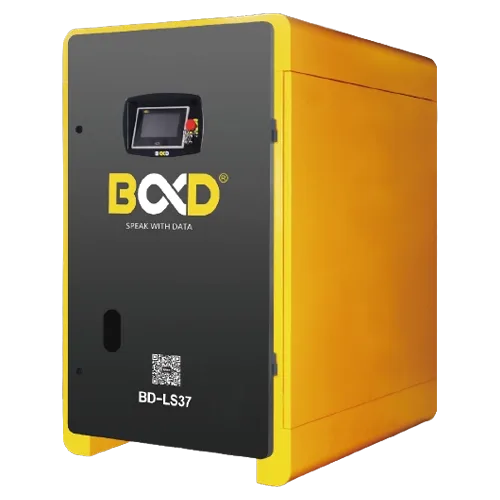
BD-LS Series
The BD-LS vertical configuration reduces floor-space demand while providing an industrial screw-compressor solution. It is suitable for workshops, production cells and utility rooms where available footprint is a major selection constraint.
- Vertical space-saving layout
- Accessible industrial package
- Practical for compact compressor rooms
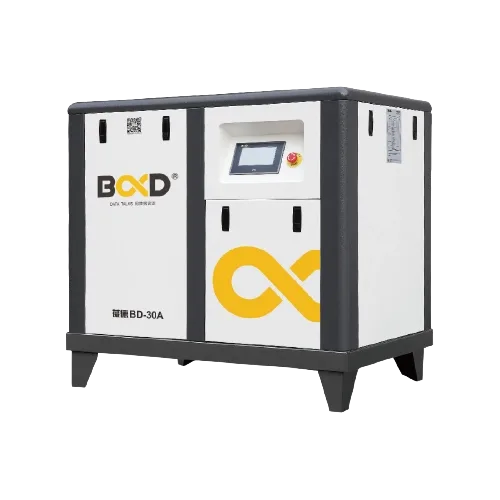
BD-30A Series
A fixed-speed screw compressor is often the straightforward choice for predictable, continuous air demand. The BD-30A can serve as a dependable base-load machine or operate within a sequenced compressor station alongside variable-speed capacity.
- Simple fixed-speed operation
- Suitable for stable demand profiles
- Base-load or multi-compressor duty
Do Not Compress to 8 Bar When the Process Needs 3
Generating high-pressure air and then reducing it through a valve wastes energy. Dedicated low-pressure screw compressors and blowers are designed to supply the required airflow closer to the true operating pressure, helping improve specific energy consumption in continuous high-volume applications.
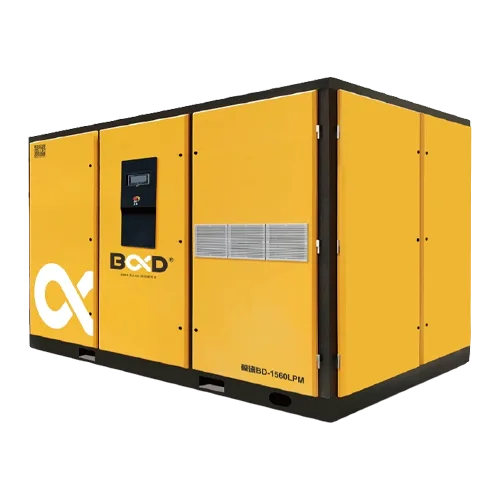
BD-LPM Series
Designed for applications such as textile air-jet looms, spinning and glass production, the BD-LPM supplies high airflow at moderate pressure without the inefficiency of over-compression. Permanent-magnet drive options help adapt output to changing demand.
- Dedicated 3–5 bar operation
- High flow per unit of power
- Textile and glass applications
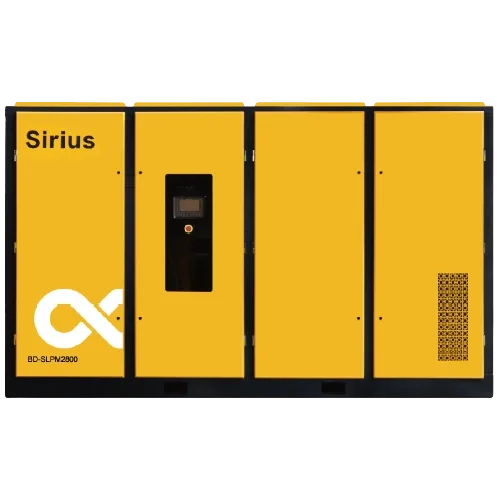
BD-SLPM Series
The BD-SLPM targets processes below conventional plant-air pressure, providing a bridge between standard screw compressors and blower applications. It suits high-volume production where stable pressure and efficient continuous airflow are essential.
- Approximately 1.2–3 bar range
- Purpose-built for super-low pressure
- Reduced throttling and over-compression
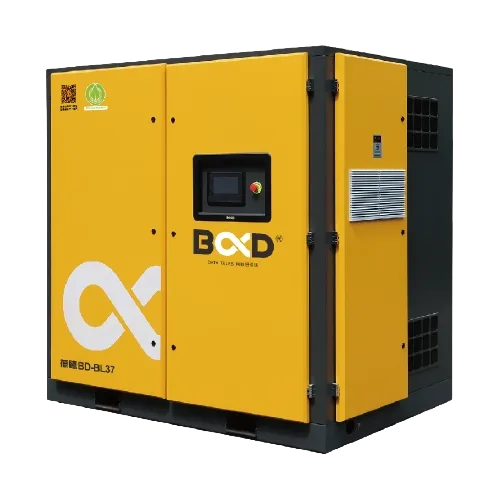
BL Series
The BL oil-free screw blower supplies large volumes of low-pressure air for wastewater aeration, pneumatic conveying and similar continuous processes. Screw compression can provide stable delivery with lower noise and improved energy performance compared with traditional Roots blower arrangements.
- Oil-free low-pressure air
- Wastewater and powder conveying duties
- Stable flow with quiet operation
Which Air Compressor Family Fits Your Application?
This overview supports initial shortlisting. Final selection depends on verified flow, pressure, purity, ambient conditions, operating hours and redundancy requirements.
| Application | Suggested Series | Technology | Typical Pressure |
|---|---|---|---|
| Fibre laser cutting | LZ22TK / PM-TK | Integrated skid or tank package | Up to 16 bar |
| Laboratory and medical | WS-TK | Oil-free scroll | Typically 8 bar |
| Food, pharmaceutical and clean production | GS / BD-DM | Water-lubricated or dry screw | 7–10 bar |
| Large central plant air | BC | Oil-free centrifugal | 2–10 bar |
| General factory air | BD-EPM / BD-30A | PM VSD or fixed-speed screw | 7–10 bar |
| Heavy continuous duty | BD-PM-II | Two-stage screw | 7–10 bar |
| Textile and glass | BD-LPM / BD-SLPM | Low-pressure screw | 1.2–5 bar |
| Aeration and conveying | BL | Oil-free screw blower | 0.5–1.2 bar |
What CAMDA Reviews Before Recommending a System
Pressure, Flow and Demand Profile
The nameplate consumption of one machine rarely tells the full story. We consider simultaneous demand, peak events, leakage allowance, future expansion and the operating pressure required at the point of use after pipework and treatment losses. This helps avoid both undersizing and the recurring energy penalty of an oversized compressor.
Air Quality and Treatment
Compressed air quality depends on the compressor technology and the downstream dryer, filters, drains and receiver. The required dew point and contaminant limits should be determined from the process. Over-treating all factory air can waste energy, while insufficient treatment can cause corrosion, product defects and unplanned downtime.
Installation Environment
Ambient temperature, ventilation, dust, available electrical supply, noise limits, access for maintenance and discharge-air heat all affect a successful installation. Heat recovery may also be considered where compressor waste heat can support another plant process.
Control and Redundancy
For critical production, the best answer may be several coordinated compressors instead of one large machine. A base-load compressor, variable-speed trim machine and standby unit can provide efficient operation and service continuity. CAMDA can discuss the operating philosophy alongside the hardware selection.
Air Compressor FAQs
How do I choose the correct air compressor size?
Start with required flow at the actual operating pressure, then consider duty cycle, simultaneous demand, leakage, treatment losses and planned expansion. Motor power alone is not a reliable sizing method. CAMDA can review process data or measured plant demand before recommending capacity.
What is the difference between fixed-speed and variable-speed compressors?
A fixed-speed compressor is efficient when demand is stable and the machine remains loaded. A variable-speed compressor adjusts motor speed and air output to changing demand, reducing unload operation and helping maintain a tighter pressure band. Many plants benefit from a combination of both.
When should I select a Class 0 oil-free compressor?
Oil-free compression is appropriate when even a small contamination risk could affect product safety, process quality or compliance. Common examples include pharmaceutical production, medical applications, electronics, food-related processes, laboratories and sensitive surface finishing.
Can compressed air replace nitrogen in laser cutting?
High-pressure clean, dry air can replace bottled nitrogen for some fibre-laser materials, thicknesses and finish requirements. Suitability depends on the laser, workpiece and expected edge quality. The compressor must provide stable flow and pressure with effective moisture and particle control.
Why use a low-pressure compressor instead of reducing 8-bar plant air?
Compressing air to a higher pressure and then regulating it down consumes unnecessary energy. A purpose-built low-pressure compressor or blower supplies the airflow closer to the true process pressure, which can reduce specific power consumption in large, continuous-demand applications.
What air treatment equipment is normally required?
The correct arrangement may include a receiver, refrigerated or desiccant dryer, coalescing filters, particulate filters, automatic drains and condensate treatment. Selection depends on pressure, flow, ambient conditions and the air-quality class required by the process.
How can a factory reduce compressed air energy cost?
Use the lowest practical system pressure, repair leaks, eliminate inappropriate uses, reduce pressure drop, select efficient control, recover heat where useful and match compressor output to demand. A demand assessment often identifies improvements beyond replacing the compressor itself.
Can CAMDA help with more than the compressor?
Yes. CAMDA Engineering can discuss the wider compressed air package, including air treatment, receiver capacity, system arrangement, controls and application fit. Share your pressure, flow, air-quality target, operating hours and site conditions so the team can review an appropriate solution.
Need Help Selecting an Air Compressor?
Tell us your application, required pressure, estimated airflow, operating hours, air-quality target and available installation space. Our team will review the requirement and help identify a suitable compressor and treatment configuration.